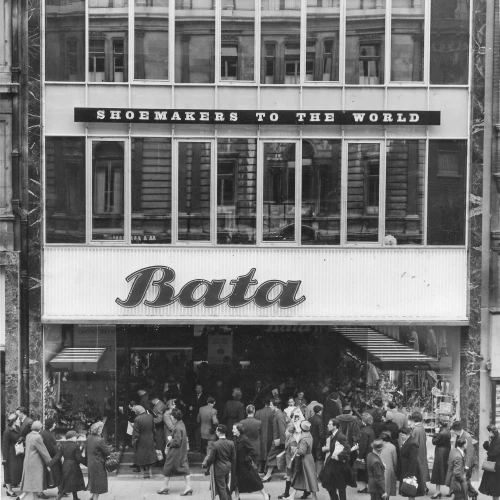
A new exhibition marking 150 years since the birth of Tomáš Baťa opens this April at the Vitrínka Gallery in Notting Hill. It explores the achievements and visionary philosophy of the Czech entrepreneur, widely regarded as one of the pioneers of globalisation thanks to a business model far ahead of its time. Focusing on the British “Bata-ville” in East Tilbury, the exhibition shows how Baťa’s modernist planning integrated work with all aspects of social life to form a cohesive system. This approach not only supported factory workers and their families, but also strengthened the Baťa enterprise as a whole.
TOMÁŠ BAŤA AND THE CONCEPT OF GARDEN CITY
The exhibition Desire to Create: Baťa’s Architecture of Belonging explores Baťa’s pioneering approach across multiple fields—from his entrepreneurial philosophy to workers’ housing, labour conditions, and innovative marketing strategies. Born in the modest Moravian city of Zlín into a family of shoemakers, Tomáš Baťa transformed his hometown into a modern urban center, guided by his lifelong vision of the “Garden City”. This concept described a carefully planned community developed in collaboration with leading Czech architects of the time, most notably František Lydie Gahura, a student of Le Corbusier, a founding figure of modern architecture.
Blending the advantages of rural living with the conveniences of urban life, Baťa’s planning included workers’ housing alongside a wide range of leisure and community spaces. These developments were designed to meet the social needs of employees while fostering a more equitable and supportive living and working environment. Following its success in Zlín, the Garden City model was exported to numerous countries around the world. In these locations, Baťa established not only factories but also a distinctive way of life for employees and their families.
BRITISH BAŤA AND EAST TILBURY
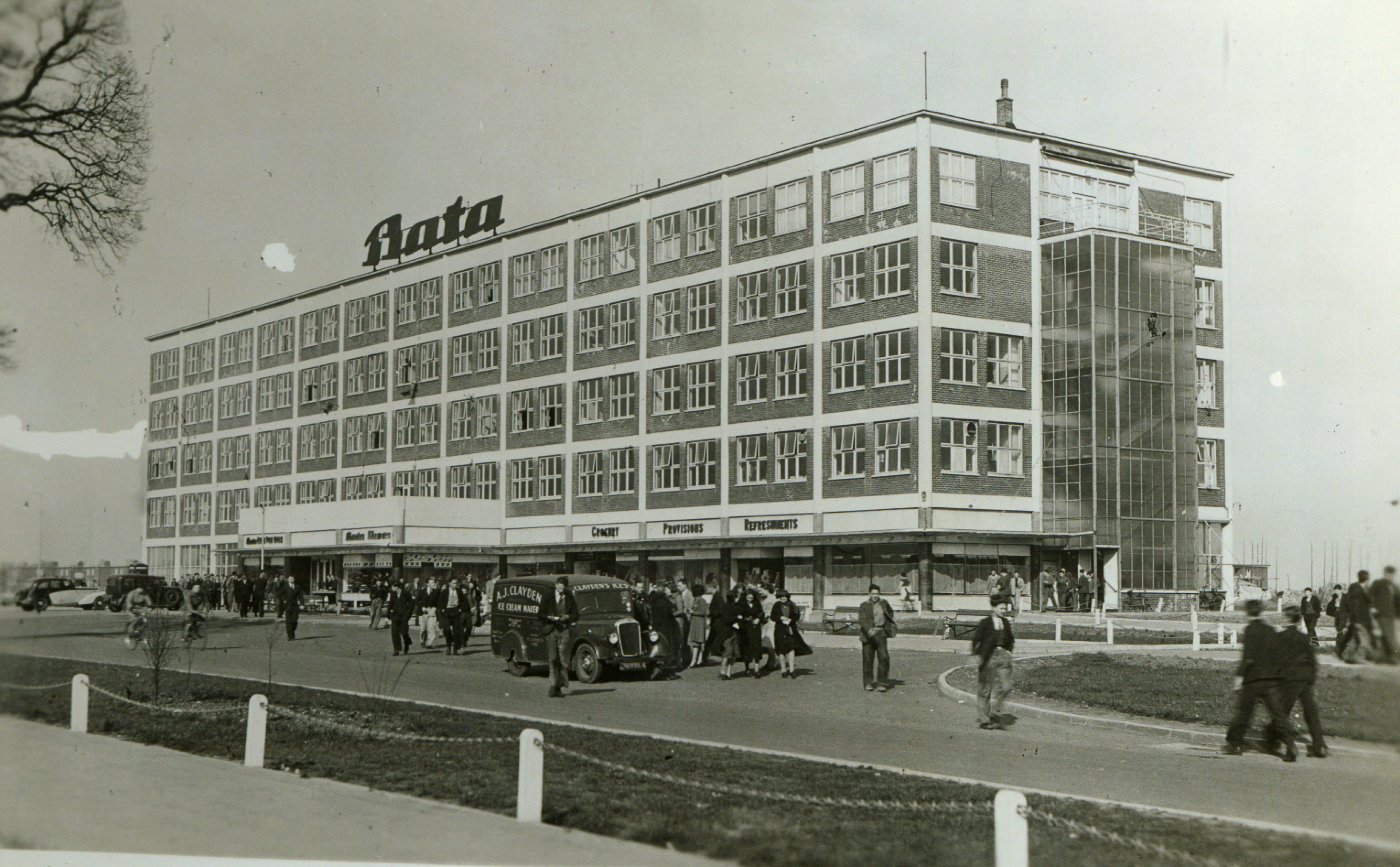
Construction of the factory in East Tilbury, Essex, began in 1932. The first single-storey building opened in 1933, soon followed by larger factory structures, workers’ housing, and a range of leisure facilities. Arranged in a chequerboard pattern and set among gardens, the functionalist houses stood in striking contrast to the typical Victorian terraces of the surrounding area, making the East Tilbury estate one of the earliest and prime examples of modernist architecture in Britain.
The development, which also featured a wide array of amenities - including its own farm, shops, cinema, tennis court, and swimming pool - became an important part of the local economy and remained so until the early 2000s.
DESIRE TO CREATE: BAŤA’S ARCHITECTURE OF BELONGING
The new exhibition, centred around Baťa’s legacy in the UK, unfolds in two complementary strands: one illuminates Baťa’s vision, philosophy, and guiding principles, while the other brings East Tilbury to life through architectural drawings, historic photographs, and original artefacts that evoke the place’s distinctive modernist atmosphere. Together, the two parts demonstrate how ideas were translated into the built environment, creating a cohesive narrative of community.
As they learn about Baťa’s vision, visitors are invited to reflect on how design continues to shape our sense of belonging today.
COMPLEMENTARY TALK
To complement the exhibition, the Czech Centre will hold a panel discussion titled Designed to Belong: Modernism, Industry and Community exploring how architecture shapes belonging — not only by providing shelter, but by designing everyday life. Using the Baťa village at East Tilbury as a starting point, the discussion will examine how modernist ideals, industrial ambition, and community planning combined to create a distinctive model of living. Czech historian Milan Balabán situates the settlement within the global story of Baťa cities, while British architectural historian Gillian Darley reflects on its place in British modernism. Chaired by journalist John Tusa, whose father was the original Baťa manager at East Tilbury. The talk takes place on 11 June 2026 and is part of this year’s London Festival of Architecture. Organised by the Czech Centre in partnership with The Twentieth Century Society.
Desire to Create: Baťa’s Architecture of Belonging opens on 9 April 2026.
-----------
Private View: Thursday 9 April, 6.30pm – 8.30pm.
Exhibition dates: 10 April – 12 June 2026.
Address: Vitrínka Gallery, 30 Kensington Palace Gardens, London, W8 4QY
Organised by the Czech Centre in partnership with Bata Heritage Centre and The Thomas Bata Foundation. More information: https://bit.ly/DesireToCreate_BatasArchitectureOfBelonging
PRESS QUERIES: Veronika Blues at blues@czechcentre.org.uk
Download the press release in pdf format ↓